






 Email this article
 Actualization of the concept “competence”, “competency”, “competence approach” in the conditions of integration of science and education
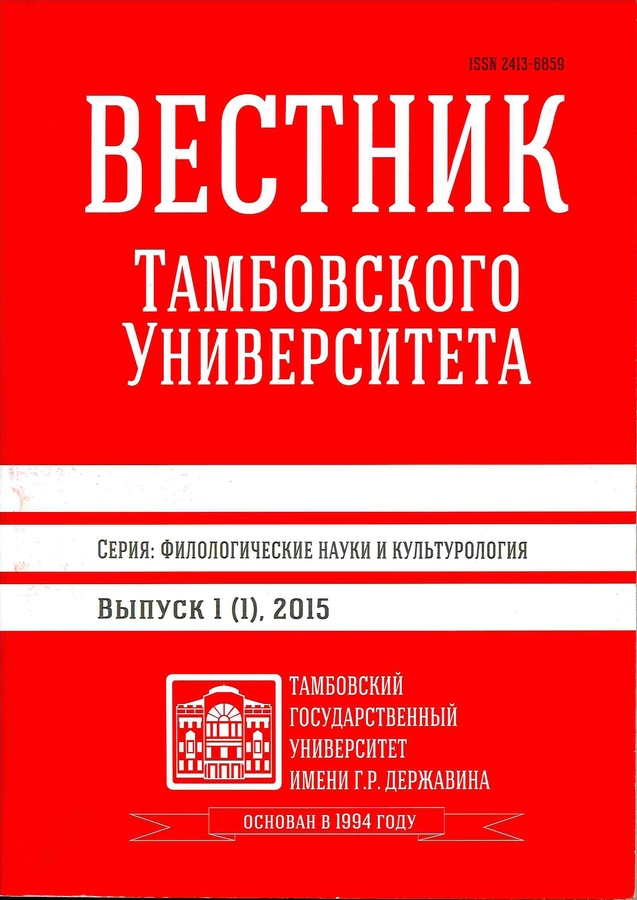
- Authors: TUMANOVA A.B.1
-
Affiliations:
- Al-Farabi Kazakh National University, Almaty, Republic of Kazakhstan
- Issue: Vol 1, No 1 (2015)
- Pages: 39-45
- Section: МЕТОДИКА И МЕТОДОЛОГИЯ
- URL: https://ogarev-online.ru/2587-6953/article/view/303090
- ID: 303090
Cite item

Abstract
A short review of use of relevant terms in modern science: competence, competency and competence approach with the aim of defining the author’s relation is given. The problem of formation of educational (key) competences at students is reviewed, an attempt to provide the rise of the quality of education and the decision of the problem of preparation of highly qualified specialist, who will suit the international standards is presented. Modern society requires the formation of competitive specialist, who can react on the rapidly changing life circumstances, because of this the concept of full system of key competences is relevant, where an important place takes communicative competence. The improvement of this type of competence is needed for effective implementation of speech activity both in the sphere of social-cultural and for future profession. This is explained by the reason that the speech of the one hand is the mean of communication and interaction between people, on the other hand the marker of intellectual potential of future specialist. It is stated that the implementation of competence approach in the institutes of higher education increases the efficiency of educational process and accordingly will increase the quality of education. That is why the development of new standards of education, new typical and working programs, educational and methodic complexes, textbooks and school-books, oriented on the expected results is needed.
About the authors
Ainagul Bektasovna TUMANOVA
Al-Farabi Kazakh National University, Almaty, Republic of Kazakhstan
Email: a.tumanova@inbox.ru
References
- Хуторской А.В. Ключевые компетенции как компонент личностно ориентированного образования // Народное образование. 2003. № 2. С. 58-64.
- Хомский Н. Язык и мышление. М., 1972.
- Селевко Г.К. Педагогические компетенции и компетентность // Сельская школа. 2004. № 3.
- Салханова Ж.Х. Компетентность и компетенции. Алматы, 2013.
- Рыжаков М.В. Ключевые компетенции для Европы // Стандарты и мониторинг в образовании. 1999. № 2.
- Аганина К.Ж. Окушылардынэкономикалык бiлiм берудiн дидактикалык негiздер: пед. гыл.: автореф. дис. … д-ра пед. наук. Алматы, 2004.
- Назарбаев Н.А. Социальная модернизация Казахстана: Двадцать шагов к Обществу Всеобщего Труда // Казахстанская правда. 2012. 10 июля.
- Бермус А.Г. Проблемы и перспективы реализации компетентностного подхода в образовании. URL: //www.eidos.ru/jornal/2002/0423. htm (дата обращения: 10.08.2015).
- Бисенбаева Ж.Н. Формирование коммуникативной компетенции у будущих офицеров на основе современных педагогических технологий: автореф. дис. … д-ра пед. наук. Алматы, 2013.
- Туманова А.Б. Уровневое обучение языкам в техническом вузе как один из способов повышения речевой культуры // Русская речевая культура и текст: 8 Международная научная конференция. Томск, 2014. С. 314-318.
- Tumanova A.B., Dauletbekova Z.T. and other. Level of language learning in a technical college in polylingual specialist training // 4 International Conference on Science and Technology. L., 2014.
- Туманова А.Б., Павлова Т.В. Коммуникативные технологии обучения русскому языку как один из эффективных способов подготовки будущих специалистов // Язык и межкультурная коммуникация: сборник материалов 3 Международной научно-теоретической конференции. Алматы, 2014. С. 35-38.
- Туманова А.Б. Реализация компетентностного подхода в преподавании русского языка в техническом вузе // Компетенции и компетентностный подход в современном образовании: коллективная монография. М., 2013. С. 210-230.
- Tumanova A.B., Kurmanbay G.S., Pavlova T.V. Formation of communicative competences at trainees in process of languages training in non-language higher education institution // Science and World. International scientific journal. Volgograd, 2014. Vol. 3. № 5 (9). P. 74-79.
Supplementary files

