




 Мақаланы E-mail арқылы жіберу
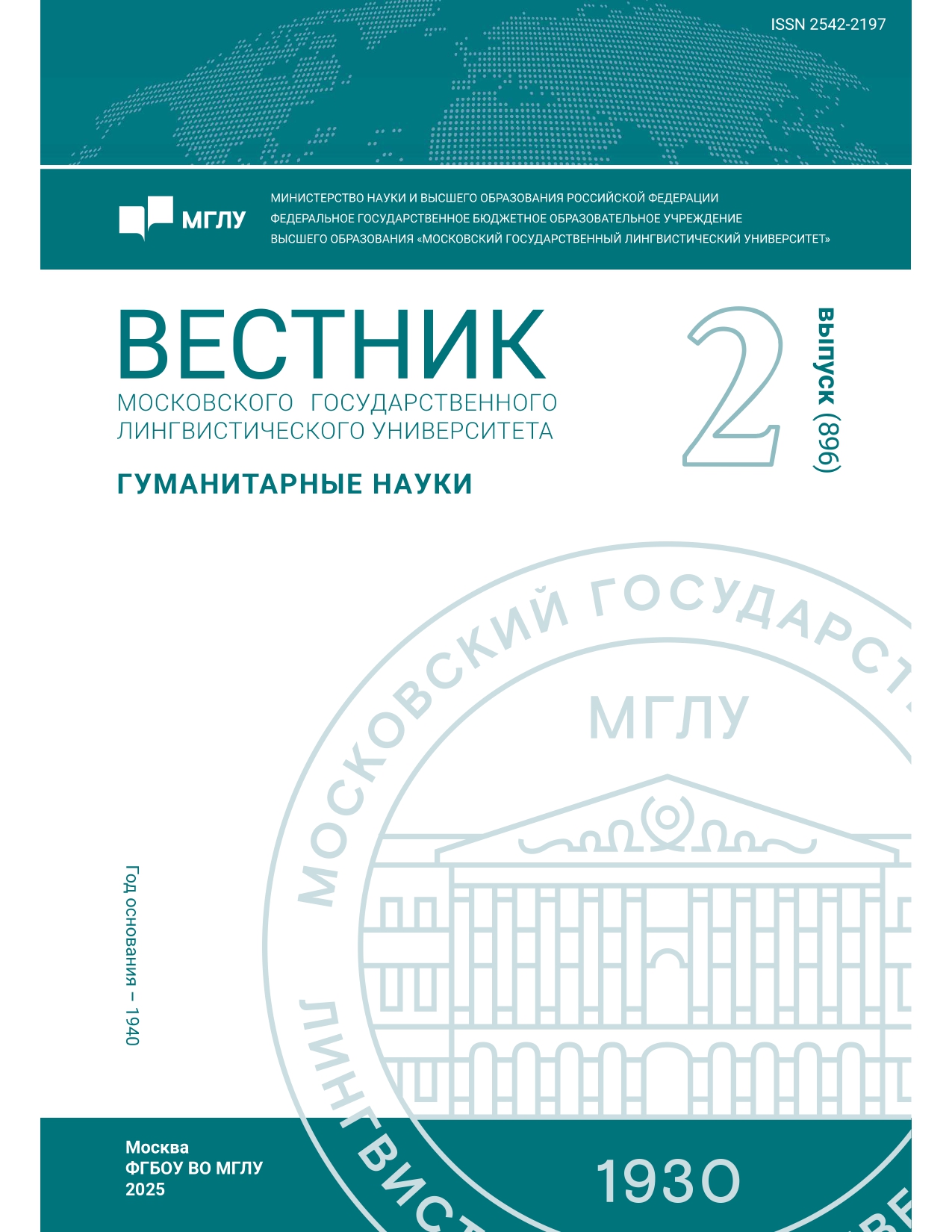
Latin Legal Term “in Camera”: Equivalents, Etymology, Discourse Analysis
- Авторлар: Marshalok N.V.1, Ulianova I.L.1
-
Мекемелер:
- Moscow State Institute of International Relations (University) of the Ministry of Foreign Affairs of the Russian Federation
- Шығарылым: № 2(896) (2025)
- Беттер: 16-21
- Бөлім: Linguistics
- URL: https://ogarev-online.ru/2542-2197/article/view/283952
- ID: 283952
Дәйексөз келтіру

Аннотация
The aim of this study is to examine the Latin legal term “in camera”, its equivalents in modern languages and their use in various discourses, from legal to literary. For this purpose, the use of the term “in camera” in the text of the Rome Statute was analyzed in the Romance, Russian and English languages. Particular attention is paid to the French legal language, where the phraseological unit “huis clos” is used as an equivalent of the term “in camera”. An etymological analysis of the components of the phraseological expression “huis clos” is carried out, its use in various discourse directions is presented, and the discursive interpretation of “huis clos” as a legal term in Sartre’s play is analyzed. The work is based on the methods of comparison, etymological analysis and discourse analysis, its results can be used in interdisciplinary research, as well as in foreign language classes.
Авторлар туралы
Nataliya Marshalok
Moscow State Institute of International Relations (University) of the Ministry of Foreign Affairs of the Russian Federation
Хат алмасуға жауапты Автор.
Email: mshtch@yandex.ru
PhD (Philology), Associate Professor, Associate Professor of the Department of Roman Languages
РесейIrina Ulianova
Moscow State Institute of International Relations (University) of the Ministry of Foreign Affairs of the Russian Federation
Email: oulianova555@inbox.ru
Associate Professor, Associate Professor of the Department of Roman Languages
Әдебиет тізімі
- Mattila, H. (2006). Comparative Legal Linguistics. Aldershot: Ashgate.
- Macleod, P. R. (1997). Latin in Legal Writing: An Inquiry into the Use of Latin in the Modern Legal World. Boston College Law Review, 39(1), 236–239.
- Tolstykh, V. L. (2013). Language and International Law. Russian Juridical Journal, 2(89), 44–62. (In Russ.)
- Irhin, Y. V. (2014). Discourse-analysis: Essence, Approaches, Methodology, Projecting. Social and humanitarian knowledge, 4, 128–143. (In Russ.)
- Marshalok, N. V., Ulianova I. L. (2022). Teaching the Latin Language for International Lawyers: Latin Terms in the Rome Statute. Yazyk. Kul’tura. Perevod: mezhkul’turnaya kommunikatsiya v tsifrovuyu ehpokhu (part 2, pp. 146–151): The digest of scientific papers. Moscow: Rusains. (In Russ.)
- Voronkov, A. I., Ponyaeva, L. P., Popova, L. M. (2002). Latinskoe nasledie v russkom yazyke = Latin heritage in the Russian language. Moscow: Flinta. (In Russ.)
- Ilyin, M. V. (1997). Slova i smysly: Opyt opisaniya klyuchevykh politicheskikh ponyatii = Words and meanings: The experience of describing key political concepts. Moscow: Rossiiskaya politicheskaya entsiklopediya. (In Russ.)
Қосымша файлдар

