




Sputum cytology and its diagnostic value
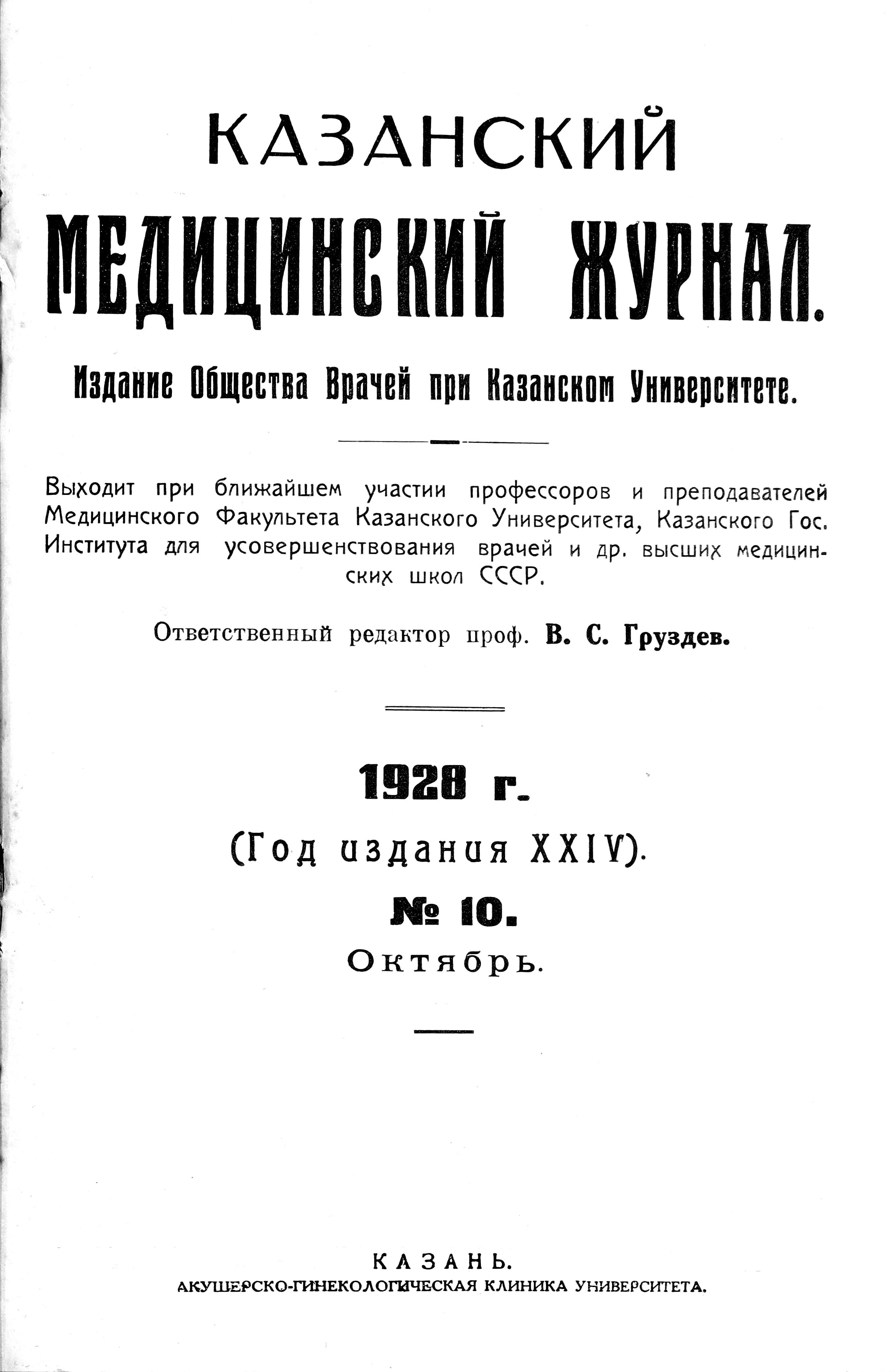
- Authors: Kramov N.A.1
-
Affiliations:
- Hospital Therapeutic Clinic of Kazan University
- Issue: Vol 24, No 10 (1928)
- Pages: 970-982
- Section: Articles
- URL: https://ogarev-online.ru/kazanmedj/article/view/91129
- DOI: https://doi.org/10.17816/kazmj91129
- ID: 91129
Cite item
Full Text

Abstract
Biermer's classification of sputum based on its visible macroscopic properties, established back in the 60s, is still the basis of the relevant diagnostic departments. The bacteriological era of the last decades of the 19th century, having put the study of pathogens at the forefront in the study of sputum, has left aside the issue of cytology and chemical properties of the constituent elements of sputum. Whereas even for the district hospital microscopic examination of urine in suspected kidney disease is considered mandatory, and morphological examination of blood in inflammatory diseases is becoming a common laboratory method, cytological examination of sputum even in the clinical setting is still not performed. The reason for this may be seen in the fact that the degenerated form elements of sputum are both more difficult to stain and are distributed unevenly in the smear due to the admixture of large amounts of mucus and albumin; this is not the case with urine and effusions, where the distribution of elements is more even, their degeneration less pronounced, and the above impurities are absent.
Keywords
Full Text
##article.viewOnOriginalSite##About the authors
N. A. Kramov
Hospital Therapeutic Clinic of Kazan University
Author for correspondence.
Email: info@eco-vector.com
Russian Federation
References
Supplementary files


