



Lexical-and-semantic microfield «MERKEL»
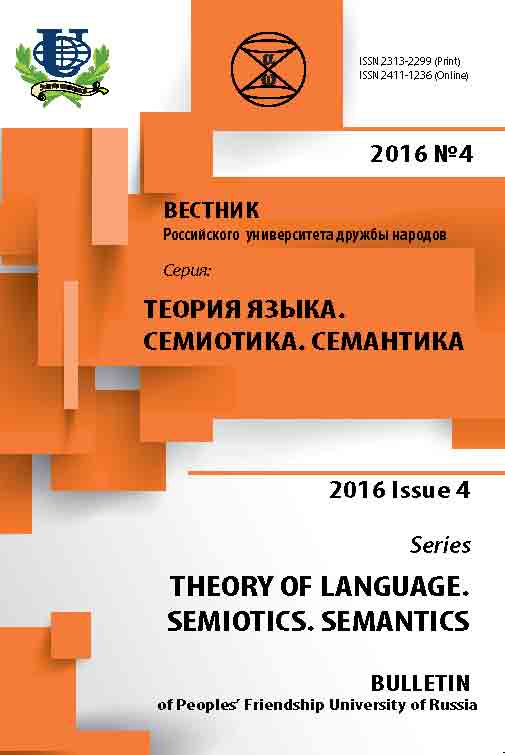
- Авторлар: Chigasheva MA1
-
Мекемелер:
- Moscow State Institute of International Relations (MGIMO-University)
- Шығарылым: № 4 (2016)
- Беттер: 74-81
- Бөлім: ARTICLES
- URL: https://ogarev-online.ru/2313-2299/article/view/341313
- ID: 341313
Дәйексөз келтіру

Аннотация
This article analyzes deonims from the perspective of lexical-semantic field. Vocabulary is the most moving part of the system of any language. It responds most quickly to changes in the surrounding world and clearly reflects not only universal, but also national characteristics of perception of reality by native speakers. Proper names, especially anthroponyms, make up a significant part of the lexical system and belong to the sphere of the national-marked units. An anthroponym, designating a particular person, has not only the nominative function of a language. It can go beyond the borders of a common noun and thus receive an opportunity to participate in the signification. This process is motivated by extralinguistic factors, by the need to find new names and words associated with the filling of a new concept. This phenomenon is called deonimization. At the present stage of development of the German language, it is widespread in the political discourse of the media. The analysis showed that deonims formed from the names of politicians and statesmen of Germany have a pronounced negative connotation. Through the example of 19 deonims formed with the name Merkel, the author attempts to structure them in lexical-semantic microfield.
Авторлар туралы
M Chigasheva
Moscow State Institute of International Relations (MGIMO-University)
Email: mchigasheva@mail.ru
Prospect Vernagskogo, 76, Moscow, Russia, 119454
Қосымша файлдар
